June 12, 2026
June 12, 2026
AI Creative Testing Workflow for Meta and TikTok Ads
Build a repeatable AI creative testing workflow that turns one idea into many ad tests, faster and with less waste.
Build a repeatable AI creative testing workflow that turns one idea into many ad tests, faster and with less waste.
Learn an AI creative testing workflow for Meta and TikTok ads that helps performance marketers test more ideas without messy one-off production.
The best AI creative testing workflow is simple: turn one product idea into a repeatable set of ad variations, test them in a clear matrix, then keep what wins. That lets performance marketers move faster without guessing.
If your team keeps making random one-off ads, you get noise, not learning. A repeatable system gives you clean tests, faster output, and less wasted creative work.
What this workflow is, in plain words
This is a reusable way to make and test ad creative. You start with one offer or product angle, then change one thing at a time, like hook, visual, format, or call to action.
The goal is not to make “more stuff.” The goal is to make more useful tests.
Same product
Same audience
One variable changed per test
Clear winner rules
That matters on Meta and TikTok because both platforms reward fresh creative, but your team still needs to know why something worked. Without structure, you cannot learn much from the results.
Why performance marketers need a repeatable testing matrix
A testing matrix is just a simple grid. It helps you decide which creative parts to combine, so you do not test random ideas forever.
For ecommerce teams, the most useful variables are usually:
Hook: pain point, desire, proof, curiosity
Format: UGC-style, product demo, founder talk, before-and-after
Angle: save time, look better, solve a problem, gift idea
Length: short cut, medium explainer, longer story
Visual style: clean studio, handheld, lifestyle, text-led
When you test these in a planned way, you can find patterns. For example, maybe “proof” hooks win on Meta while “curiosity” hooks do better on TikTok. Or maybe one format works for cold traffic, while another only works for retargeting.
That kind of learning is worth more than a pile of pretty ads.
AI creative testing workflow for Meta and TikTok ads
Here is a simple workflow you can reuse every week.
Pick one product and one audience. Do not mix too much at once.
Write one core message. Example: “This serum helps dry skin feel calm and soft.”
Choose 3 to 5 hook types. Keep the message the same, change the opening.
Create 3 visual directions. Example: product close-up, UGC voiceover, quick demo.
Make the variants using AI image, video, voice, and text tools.
Review for brand fit and truth. Check claims, tone, and product details.
Launch in a matrix. Keep test groups simple so you can read the results.
Keep winners and remap losers. Turn what you learned into the next round.
A good matrix does not need to be huge. In many ecommerce teams, 3 hooks x 3 visuals x 2 lengths is already enough to find useful signals without overwhelming media buying.
Test part | Example options | What you learn |
|---|---|---|
Hook | Pain, proof, curiosity | What gets attention fast |
Visual | UGC, demo, lifestyle | What feels real and clear |
Length | 6-10s, 15-20s, 30s | How much story the audience needs |
How to build the matrix from one brief
Start with a short brief that answers four things:
What is the product?
Who is it for?
What problem does it solve?
What proof can you show?
Example brief: “A reusable water bottle for busy parents who want fewer spills and easy cleanup.”
From that brief, create a small set of ad inputs:
Hook ideas: “Spills stopped here,” “One bottle, less mess,” “Why parents switched”
Visual ideas: child in car seat, quick kitchen demo, parent talking to camera
Proof ideas: leak test, quick clean-up, before-and-after mess
Script output: one sentence problem, one benefit, one proof point, one ask
That is where Kubflow helps. You can build the steps once, then rerun them for each new product, season, or angle instead of rebuilding the process every time. If you want a deeper setup view, see Kubflow docs for workflow building.
What good inputs and outputs look like
Here is a simple example for a skincare brand.
Input: “Dry skin cream for winter, target is women who want a simple night routine.”
Output set:
Hook 1: “Dry skin by morning? Try this night fix.”
Hook 2: “One cream, less guesswork.”
Hook 3: “What I use when my face feels tight.”
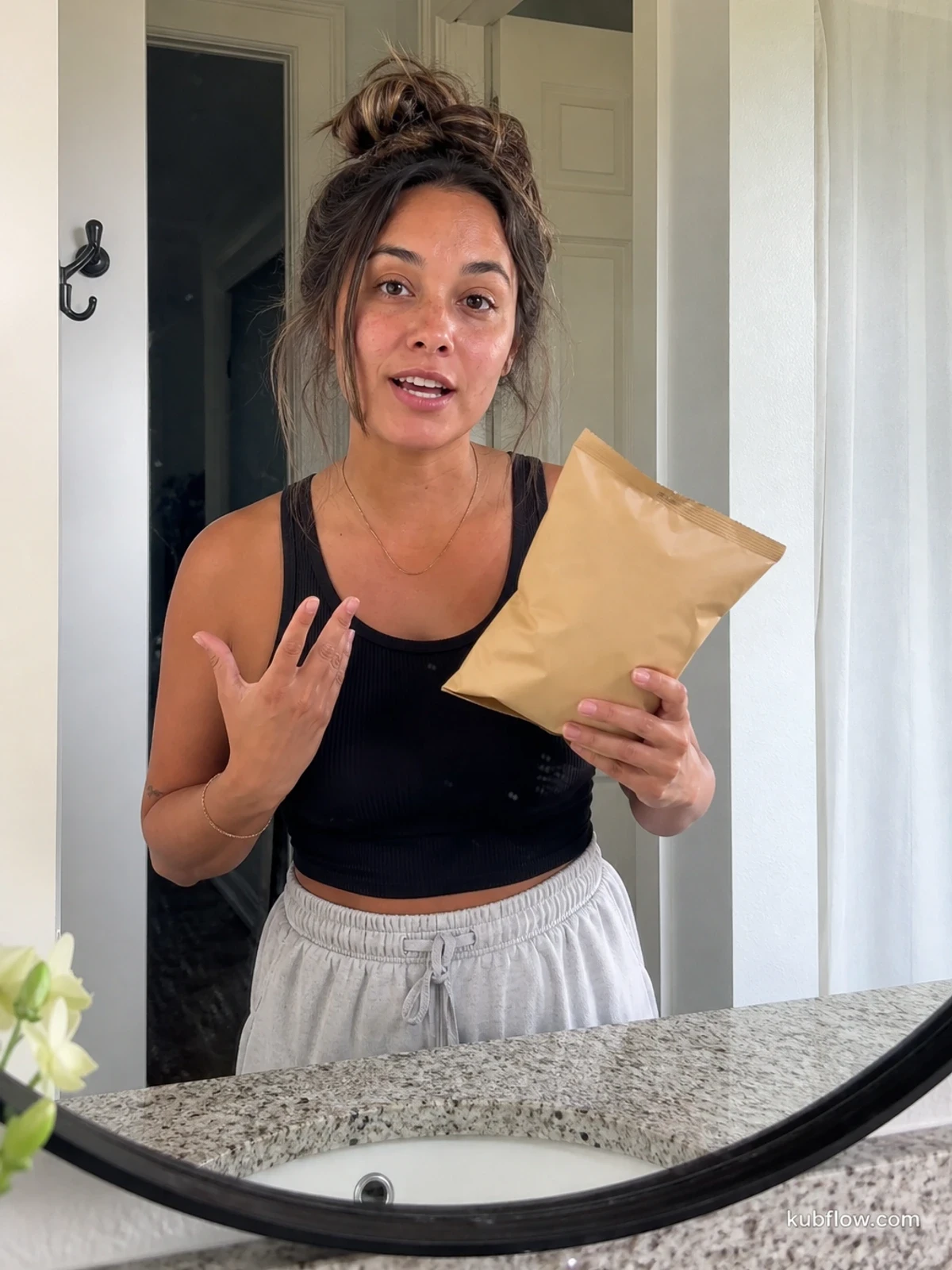
Visual 1: handheld talking head
Visual 2: close-up product use
Visual 3: bathroom routine clip
Script: 15-second version and 30-second version
Each output should serve a purpose. A hook gets attention. A visual makes it feel real. A script explains the point. A final frame asks for the next step.
Quality checklist before you spend money
Before launch, check these items:
Is the claim simple and true?
Can a viewer understand the offer in 3 seconds?
Does the video feel native to Meta or TikTok?
Did you change only one or two things per test group?
Can you explain what success or failure means?
Is the creative easy to remake if it wins?
If the answer is no to any of these, fix the creative before you scale spend.
Also, keep a note of what you learned. The real value of an AI creative testing workflow is not just making more ads. It is building a library of hooks, formats, and angles your team can reuse.
Common mistakes that waste tests
Testing too many things at once, which makes results hard to read.
Using vague prompts, which creates generic creative.
Skipping review, which can lead to off-brand or risky claims.
Making every ad look different, which breaks the learning loop.
Not saving winners as templates, which forces you to start over.
A lot of teams move fast but never get repeatable wins. The fix is not more chaos. The fix is a tighter system.
Where Kubflow fits in
Kubflow is built for teams that want the same process every week: brief, generate, review, launch, learn, repeat. Because it connects image, video, audio, and text models in one visual workflow, you can route each task to the right step instead of doing everything by hand.
That means you can keep your testing matrix consistent while still making new creative fast. When one variant wins, you can turn it into the next batch without starting from zero.
If you want to see how this becomes a repeatable production system, explore Kubflow for AI ad creative workflows.
A simple weekly plan you can copy
Monday: choose one offer and one audience.
Tuesday: write 3 hook types and 3 visual directions.
Wednesday: generate variants and review them.
Thursday: launch the matrix.
Friday: note the winners and build the next round from the best pattern.
That rhythm is enough to keep learning without burning out your creative team.
If you want a cleaner way to build and rerun this process, Kubflow gives you the structure to do it without turning every ad batch into a new project.


Learn an AI creative testing workflow for Meta and TikTok ads that helps performance marketers test more ideas without messy one-off production.
The best AI creative testing workflow is simple: turn one product idea into a repeatable set of ad variations, test them in a clear matrix, then keep what wins. That lets performance marketers move faster without guessing.
If your team keeps making random one-off ads, you get noise, not learning. A repeatable system gives you clean tests, faster output, and less wasted creative work.
What this workflow is, in plain words
This is a reusable way to make and test ad creative. You start with one offer or product angle, then change one thing at a time, like hook, visual, format, or call to action.
The goal is not to make “more stuff.” The goal is to make more useful tests.
Same product
Same audience
One variable changed per test
Clear winner rules
That matters on Meta and TikTok because both platforms reward fresh creative, but your team still needs to know why something worked. Without structure, you cannot learn much from the results.
Why performance marketers need a repeatable testing matrix
A testing matrix is just a simple grid. It helps you decide which creative parts to combine, so you do not test random ideas forever.
For ecommerce teams, the most useful variables are usually:
Hook: pain point, desire, proof, curiosity
Format: UGC-style, product demo, founder talk, before-and-after
Angle: save time, look better, solve a problem, gift idea
Length: short cut, medium explainer, longer story
Visual style: clean studio, handheld, lifestyle, text-led
When you test these in a planned way, you can find patterns. For example, maybe “proof” hooks win on Meta while “curiosity” hooks do better on TikTok. Or maybe one format works for cold traffic, while another only works for retargeting.
That kind of learning is worth more than a pile of pretty ads.
AI creative testing workflow for Meta and TikTok ads
Here is a simple workflow you can reuse every week.
Pick one product and one audience. Do not mix too much at once.
Write one core message. Example: “This serum helps dry skin feel calm and soft.”
Choose 3 to 5 hook types. Keep the message the same, change the opening.
Create 3 visual directions. Example: product close-up, UGC voiceover, quick demo.
Make the variants using AI image, video, voice, and text tools.
Review for brand fit and truth. Check claims, tone, and product details.
Launch in a matrix. Keep test groups simple so you can read the results.
Keep winners and remap losers. Turn what you learned into the next round.
A good matrix does not need to be huge. In many ecommerce teams, 3 hooks x 3 visuals x 2 lengths is already enough to find useful signals without overwhelming media buying.
Test part | Example options | What you learn |
|---|---|---|
Hook | Pain, proof, curiosity | What gets attention fast |
Visual | UGC, demo, lifestyle | What feels real and clear |
Length | 6-10s, 15-20s, 30s | How much story the audience needs |
How to build the matrix from one brief
Start with a short brief that answers four things:
What is the product?
Who is it for?
What problem does it solve?
What proof can you show?
Example brief: “A reusable water bottle for busy parents who want fewer spills and easy cleanup.”
From that brief, create a small set of ad inputs:
Hook ideas: “Spills stopped here,” “One bottle, less mess,” “Why parents switched”
Visual ideas: child in car seat, quick kitchen demo, parent talking to camera
Proof ideas: leak test, quick clean-up, before-and-after mess
Script output: one sentence problem, one benefit, one proof point, one ask
That is where Kubflow helps. You can build the steps once, then rerun them for each new product, season, or angle instead of rebuilding the process every time. If you want a deeper setup view, see Kubflow docs for workflow building.
What good inputs and outputs look like
Here is a simple example for a skincare brand.
Input: “Dry skin cream for winter, target is women who want a simple night routine.”
Output set:
Hook 1: “Dry skin by morning? Try this night fix.”
Hook 2: “One cream, less guesswork.”
Hook 3: “What I use when my face feels tight.”
Visual 1: handheld talking head
Visual 2: close-up product use
Visual 3: bathroom routine clip
Script: 15-second version and 30-second version
Each output should serve a purpose. A hook gets attention. A visual makes it feel real. A script explains the point. A final frame asks for the next step.
Quality checklist before you spend money
Before launch, check these items:
Is the claim simple and true?
Can a viewer understand the offer in 3 seconds?
Does the video feel native to Meta or TikTok?
Did you change only one or two things per test group?
Can you explain what success or failure means?
Is the creative easy to remake if it wins?
If the answer is no to any of these, fix the creative before you scale spend.
Also, keep a note of what you learned. The real value of an AI creative testing workflow is not just making more ads. It is building a library of hooks, formats, and angles your team can reuse.
Common mistakes that waste tests
Testing too many things at once, which makes results hard to read.
Using vague prompts, which creates generic creative.
Skipping review, which can lead to off-brand or risky claims.
Making every ad look different, which breaks the learning loop.
Not saving winners as templates, which forces you to start over.
A lot of teams move fast but never get repeatable wins. The fix is not more chaos. The fix is a tighter system.
Where Kubflow fits in
Kubflow is built for teams that want the same process every week: brief, generate, review, launch, learn, repeat. Because it connects image, video, audio, and text models in one visual workflow, you can route each task to the right step instead of doing everything by hand.
That means you can keep your testing matrix consistent while still making new creative fast. When one variant wins, you can turn it into the next batch without starting from zero.
If you want to see how this becomes a repeatable production system, explore Kubflow for AI ad creative workflows.
A simple weekly plan you can copy
Monday: choose one offer and one audience.
Tuesday: write 3 hook types and 3 visual directions.
Wednesday: generate variants and review them.
Thursday: launch the matrix.
Friday: note the winners and build the next round from the best pattern.
That rhythm is enough to keep learning without burning out your creative team.
If you want a cleaner way to build and rerun this process, Kubflow gives you the structure to do it without turning every ad batch into a new project.