July 4, 2026
July 4, 2026
AI Image Video Voice Workflow for Ecommerce Teams
Turn one idea into images, video, and voice in one repeatable workflow for faster ecommerce creative tests.
Turn one idea into images, video, and voice in one repeatable workflow for faster ecommerce creative tests.
Learn how to combine AI image, video, and voice in one workflow so ecommerce teams can make faster, more useful ad assets.
If you want one simple way to make more ad creative, use an AI image video voice workflow that turns one brief into stills, motion, and voice in the same run. That gives ecommerce teams faster tests, cleaner handoffs, and more reuse from each idea.
The best version is not random generation. It is a repeatable path: write the idea once, make the image first, turn that image into video, add voice last, then review and ship the best set. This article shows that path in plain English.
What this workflow is, in one sentence
An AI image video voice workflow is a set of steps that helps you make a product image, a short video, and a spoken script from the same creative idea.
For ecommerce teams, that matters because one offer can become:
a product hero image for static ads
a short motion clip for TikTok, Meta, or Reels
a voice-led UGC style ad or product demo
variant versions for different hooks, angles, and audiences
The goal is not to create more noise. The goal is to create more usable ad assets with less rework.
Why teams should combine image, video, and voice
Many teams still treat each format like a separate project. That slows everything down. The designer makes a still. Then someone else writes a script. Then a video tool starts over from scratch.
When you connect the three, you get a cleaner system:
Image gives you the visual idea and product framing.
Video gives you movement, attention, and proof.
Voice gives you the human message and pacing.
This is useful for full-funnel creative because each layer can serve a different job. The still can sell the look. The video can show the use. The voice can explain the reason to care.
If your team already makes product photos or ad variants, this workflow can sit on top of that work instead of replacing it. If you want a deeper view of the structure, see Kubflow docs for building reusable creative workflows.
The simplest AI image video voice workflow
Here is the basic recipe we recommend from a practical workflow point of view.
Start with one clear brief. Pick one product, one audience, one offer, and one angle.
Write a short script. Keep it plain. One hook, one benefit, one close.
Make the image first. Use it to lock the look, product placement, and mood.
Turn the image into video. Add motion that fits the use case, like a hand movement, camera push, or product reveal.
Add voice last. Match the voice to the angle, for example calm, excited, direct, or tutorial style.
Review for fit. Check the product shape, claim, pacing, and brand tone.
Export variants. Make a few versions for different hooks or audience groups.
That order matters. If you do voice too early, you may end up rewriting the whole thing after the visuals are ready. If you do video before the image is locked, you can waste time on motion that does not fit the creative.
AI image video voice workflow examples for ecommerce
Here are three simple examples that show how the same workflow can serve different ad types.
1. New product launch
Image input: a clean product hero shot with the product centered
Video output: a 6 to 10 second clip with a slow zoom and feature callouts
Voice output: “Meet the easiest way to get X without doing Y.”
2. Problem-solution ad
Image input: product in the problem setting
Video output: before and after motion or quick scene change
Voice output: “If you are tired of X, this was made for you.”
3. UGC-style demo
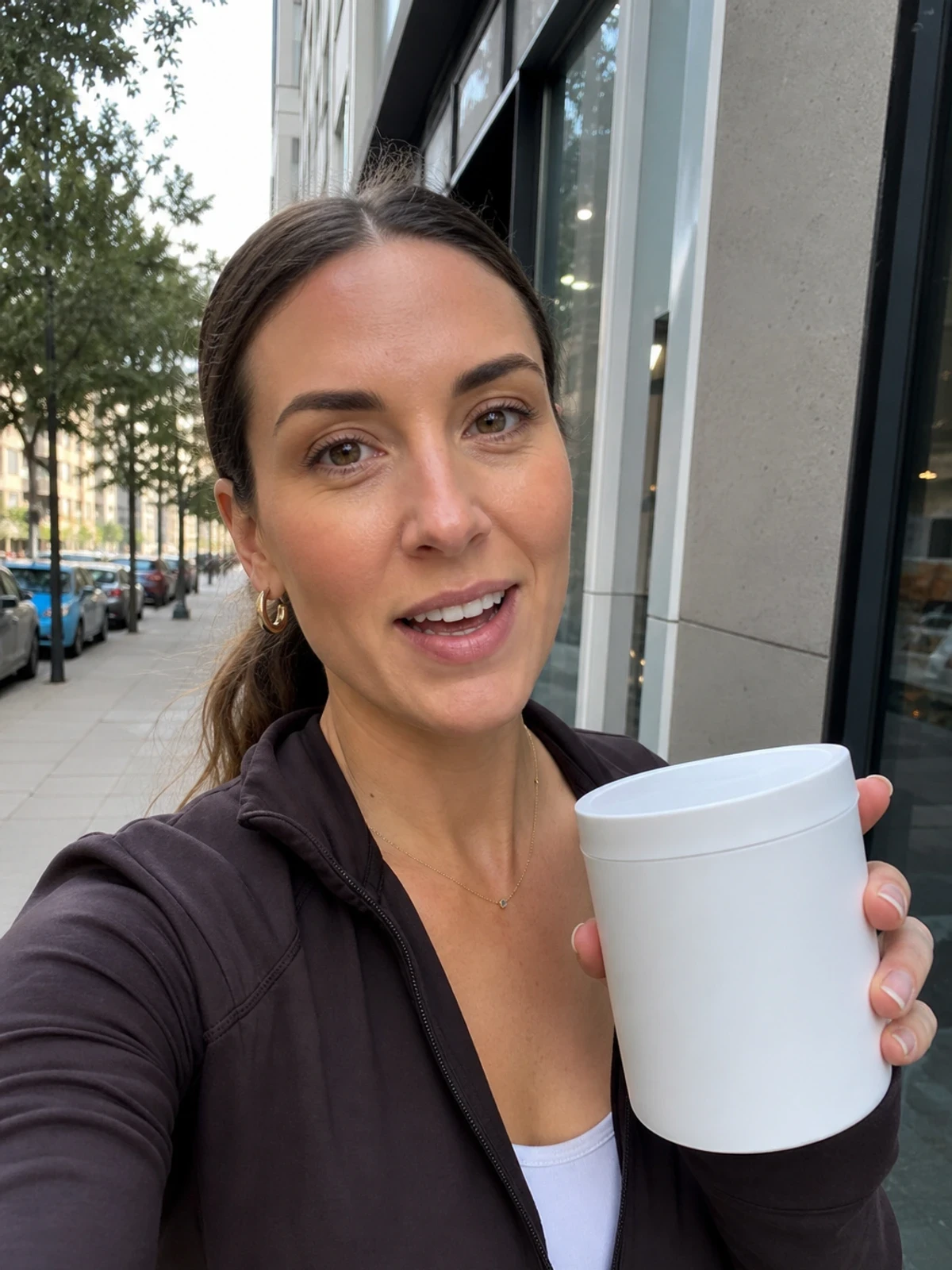
Image input: creator holding or using the product
Video output: short talking-head style movement with cutaways
Voice output: natural, simple, and unscripted-feeling
Notice the pattern: the visual format changes, but the core message stays the same. That is what makes the workflow repeatable.
What to feed each model so the output stays useful
Bad results usually come from vague inputs. Good results start with clear pieces.
Give the image model:
product name and type
background or setting
mood, like clean, warm, premium, or casual
must-keep details, like label, color, or shape
Give the video model:
the image it should animate
motion direction, like slow push in or slight hand movement
clip length target
what should stay stable
Give the voice model:
hook line
benefit line
proof or reason line
tone, like friendly, direct, or expert
Example prompt stack:
Image: “Create a clean product shot of a stainless steel water bottle on a bright kitchen counter, premium feel, keep logo clear.”
Video: “Animate this image with a gentle camera push and small steam-like motion in the background, keep the bottle unchanged.”
Voice: “Stay hydrated with a bottle that keeps drinks cold longer. Simple, durable, ready for daily use.”
Quality checklist before you ship
Most teams do not need more generation. They need a better check.
Does the product still look like the real product?
Is the message easy to understand in one watch?
Does the voice match the brand?
Does the motion help, or just distract?
Would a shopper understand the offer without sound?
Does the final asset feel specific, not generic?
If the answer is no to two or more of those, do another pass or switch the angle. Small fixes often beat starting over.
Step | What you make | Why it helps |
|---|---|---|
Brief | One idea, one audience, one offer | Keeps the workflow focused |
Image | Visual anchor | Locks the look and product framing |
Video | Motion asset | Adds attention and action |
Voice | Spoken message | Makes the creative feel human |
Review | Final check | Stops weak ads before launch |
Common mistakes to avoid
Making each asset from scratch. This wastes time and breaks consistency.
Writing too much copy. Long scripts make the final ad harder to use.
Letting the image drift. If the product shape changes, the ad may feel fake.
Using voice that sounds too polished. For many ecommerce ads, plain language works better.
Skipping review. AI can speed up work, but it should not skip judgment.
The fix is simple: keep one source idea and route it through the same steps every time.
Where Kubflow fits in
Kubflow is built for teams that want to connect image, video, audio, and text models in one visual path. That means you can set up this AI image video voice workflow once, then reuse it for launch ads, UGC style clips, seasonal promos, and testing variants.
Instead of juggling disconnected tools, you can build a repeatable creative flow around the way your team actually works. That is useful when you need more output without making the process messier.
If you want to start small, build one workflow for one product line, then improve it after the first round of assets. See how Kubflow helps teams build reusable AI creative workflows.
A simple checklist to start this week
Pick one product and one offer
Write one short hook and one benefit line
Make one image that sets the look
Turn it into one short video
Add one voice version and one silent version
Review for clarity, fit, and brand feel
Save the steps so you can run them again
That is the real win of an AI image video voice workflow. It gives your team a way to make more useful creative without starting from zero every time.
If you are ready to build that system, Kubflow gives you the place to connect the steps and rerun them for future campaigns.


Learn how to combine AI image, video, and voice in one workflow so ecommerce teams can make faster, more useful ad assets.
If you want one simple way to make more ad creative, use an AI image video voice workflow that turns one brief into stills, motion, and voice in the same run. That gives ecommerce teams faster tests, cleaner handoffs, and more reuse from each idea.
The best version is not random generation. It is a repeatable path: write the idea once, make the image first, turn that image into video, add voice last, then review and ship the best set. This article shows that path in plain English.
What this workflow is, in one sentence
An AI image video voice workflow is a set of steps that helps you make a product image, a short video, and a spoken script from the same creative idea.
For ecommerce teams, that matters because one offer can become:
a product hero image for static ads
a short motion clip for TikTok, Meta, or Reels
a voice-led UGC style ad or product demo
variant versions for different hooks, angles, and audiences
The goal is not to create more noise. The goal is to create more usable ad assets with less rework.
Why teams should combine image, video, and voice
Many teams still treat each format like a separate project. That slows everything down. The designer makes a still. Then someone else writes a script. Then a video tool starts over from scratch.
When you connect the three, you get a cleaner system:
Image gives you the visual idea and product framing.
Video gives you movement, attention, and proof.
Voice gives you the human message and pacing.
This is useful for full-funnel creative because each layer can serve a different job. The still can sell the look. The video can show the use. The voice can explain the reason to care.
If your team already makes product photos or ad variants, this workflow can sit on top of that work instead of replacing it. If you want a deeper view of the structure, see Kubflow docs for building reusable creative workflows.
The simplest AI image video voice workflow
Here is the basic recipe we recommend from a practical workflow point of view.
Start with one clear brief. Pick one product, one audience, one offer, and one angle.
Write a short script. Keep it plain. One hook, one benefit, one close.
Make the image first. Use it to lock the look, product placement, and mood.
Turn the image into video. Add motion that fits the use case, like a hand movement, camera push, or product reveal.
Add voice last. Match the voice to the angle, for example calm, excited, direct, or tutorial style.
Review for fit. Check the product shape, claim, pacing, and brand tone.
Export variants. Make a few versions for different hooks or audience groups.
That order matters. If you do voice too early, you may end up rewriting the whole thing after the visuals are ready. If you do video before the image is locked, you can waste time on motion that does not fit the creative.
AI image video voice workflow examples for ecommerce
Here are three simple examples that show how the same workflow can serve different ad types.
1. New product launch
Image input: a clean product hero shot with the product centered
Video output: a 6 to 10 second clip with a slow zoom and feature callouts
Voice output: “Meet the easiest way to get X without doing Y.”
2. Problem-solution ad
Image input: product in the problem setting
Video output: before and after motion or quick scene change
Voice output: “If you are tired of X, this was made for you.”
3. UGC-style demo
Image input: creator holding or using the product
Video output: short talking-head style movement with cutaways
Voice output: natural, simple, and unscripted-feeling
Notice the pattern: the visual format changes, but the core message stays the same. That is what makes the workflow repeatable.
What to feed each model so the output stays useful
Bad results usually come from vague inputs. Good results start with clear pieces.
Give the image model:
product name and type
background or setting
mood, like clean, warm, premium, or casual
must-keep details, like label, color, or shape
Give the video model:
the image it should animate
motion direction, like slow push in or slight hand movement
clip length target
what should stay stable
Give the voice model:
hook line
benefit line
proof or reason line
tone, like friendly, direct, or expert
Example prompt stack:
Image: “Create a clean product shot of a stainless steel water bottle on a bright kitchen counter, premium feel, keep logo clear.”
Video: “Animate this image with a gentle camera push and small steam-like motion in the background, keep the bottle unchanged.”
Voice: “Stay hydrated with a bottle that keeps drinks cold longer. Simple, durable, ready for daily use.”
Quality checklist before you ship
Most teams do not need more generation. They need a better check.
Does the product still look like the real product?
Is the message easy to understand in one watch?
Does the voice match the brand?
Does the motion help, or just distract?
Would a shopper understand the offer without sound?
Does the final asset feel specific, not generic?
If the answer is no to two or more of those, do another pass or switch the angle. Small fixes often beat starting over.
Step | What you make | Why it helps |
|---|---|---|
Brief | One idea, one audience, one offer | Keeps the workflow focused |
Image | Visual anchor | Locks the look and product framing |
Video | Motion asset | Adds attention and action |
Voice | Spoken message | Makes the creative feel human |
Review | Final check | Stops weak ads before launch |
Common mistakes to avoid
Making each asset from scratch. This wastes time and breaks consistency.
Writing too much copy. Long scripts make the final ad harder to use.
Letting the image drift. If the product shape changes, the ad may feel fake.
Using voice that sounds too polished. For many ecommerce ads, plain language works better.
Skipping review. AI can speed up work, but it should not skip judgment.
The fix is simple: keep one source idea and route it through the same steps every time.
Where Kubflow fits in
Kubflow is built for teams that want to connect image, video, audio, and text models in one visual path. That means you can set up this AI image video voice workflow once, then reuse it for launch ads, UGC style clips, seasonal promos, and testing variants.
Instead of juggling disconnected tools, you can build a repeatable creative flow around the way your team actually works. That is useful when you need more output without making the process messier.
If you want to start small, build one workflow for one product line, then improve it after the first round of assets. See how Kubflow helps teams build reusable AI creative workflows.
A simple checklist to start this week
Pick one product and one offer
Write one short hook and one benefit line
Make one image that sets the look
Turn it into one short video
Add one voice version and one silent version
Review for clarity, fit, and brand feel
Save the steps so you can run them again
That is the real win of an AI image video voice workflow. It gives your team a way to make more useful creative without starting from zero every time.
If you are ready to build that system, Kubflow gives you the place to connect the steps and rerun them for future campaigns.